I have produced a new work ‘Hellfire: Rediffusion Radio Relay Redux’ for Ramsgate Festival of Sounds Sonic Trail running Friday 11th to Sunday 13th Sept at the Mascot Gallery, 7 Chatham St, Ramsgate CT11. from 12:00 PM – 4:00 PM. Private View Friday at 4pm – 6pm.
More details on the trail :
https://www.tickettailor.com/events/ramsgatefestivalofsound1/2306685?date=2026-09-11
In the Gallery & Signals Over Silence
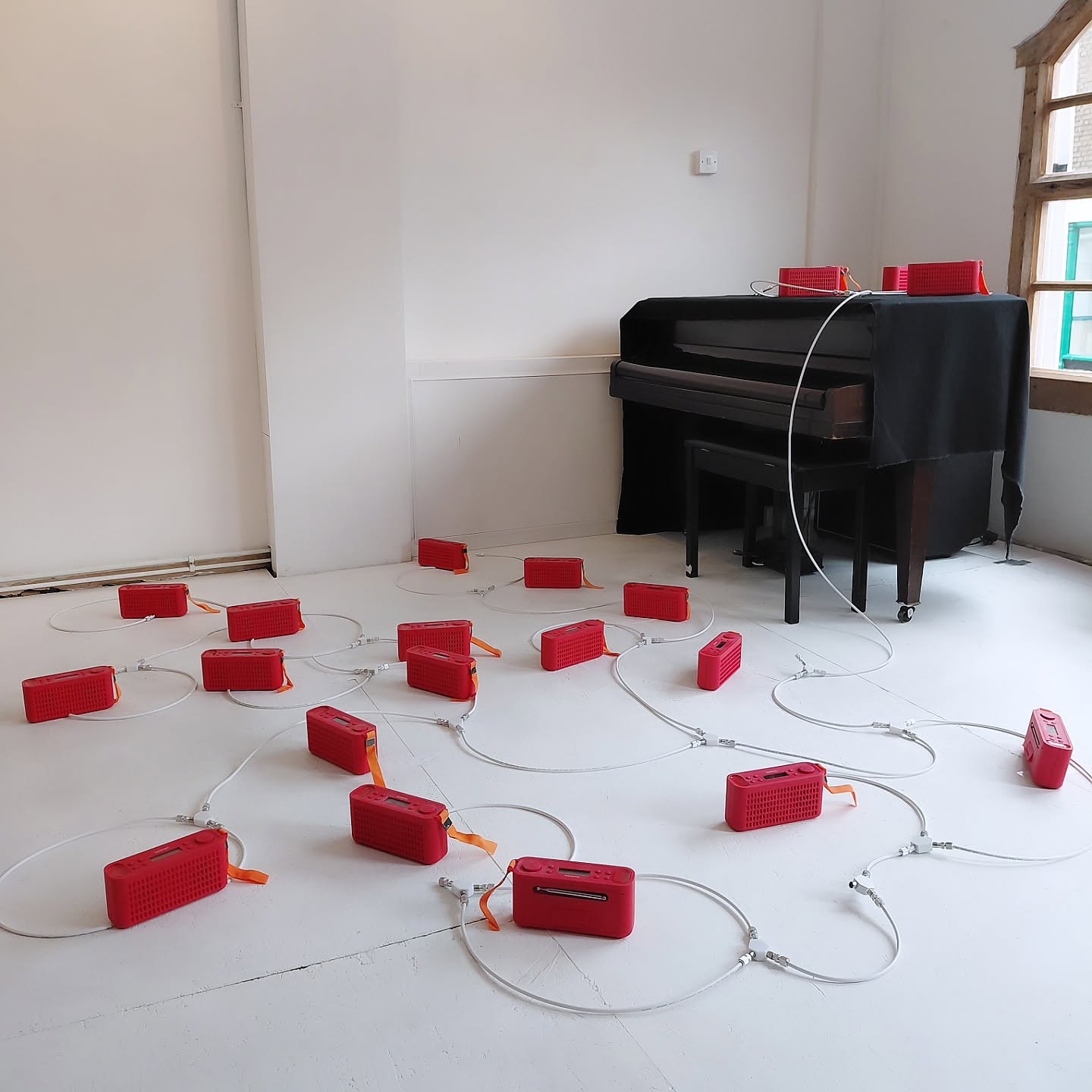
Inside the gallery, invisible frequencies gain physical, sculptural gravity. The room is webbed with recycled polyethylene cables—highlighting petrochemical persistence, these synthetic vines acting to map out the ‘ Thanet Broadcasting System’.
A set of red radios relay the work as a looping meditation on transmission and human resistance from the home front. This sonic composition features narrated teen accounts of survivial during the Ramesgate bomb strikes in WW2, bridging past and present, by weaving modern jamming techniques, sustained drones and electronic textures, via electromagnetic frequencies.
Related History and background for the work:
A Copper Web: Thanet Ether
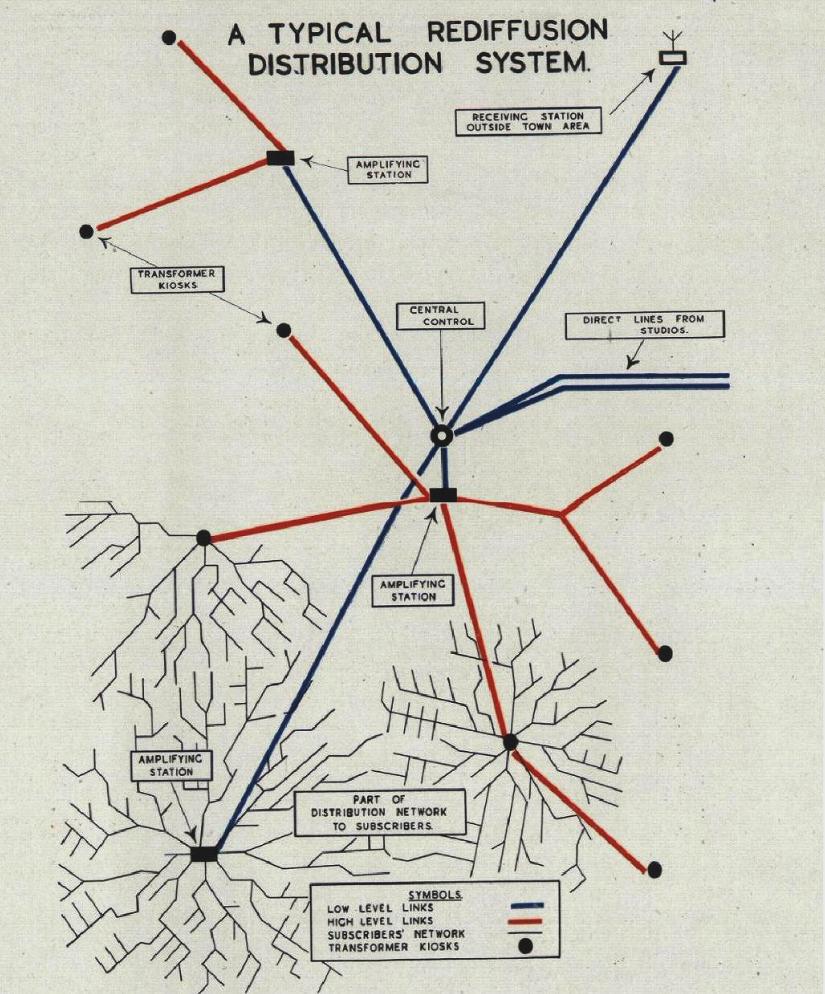
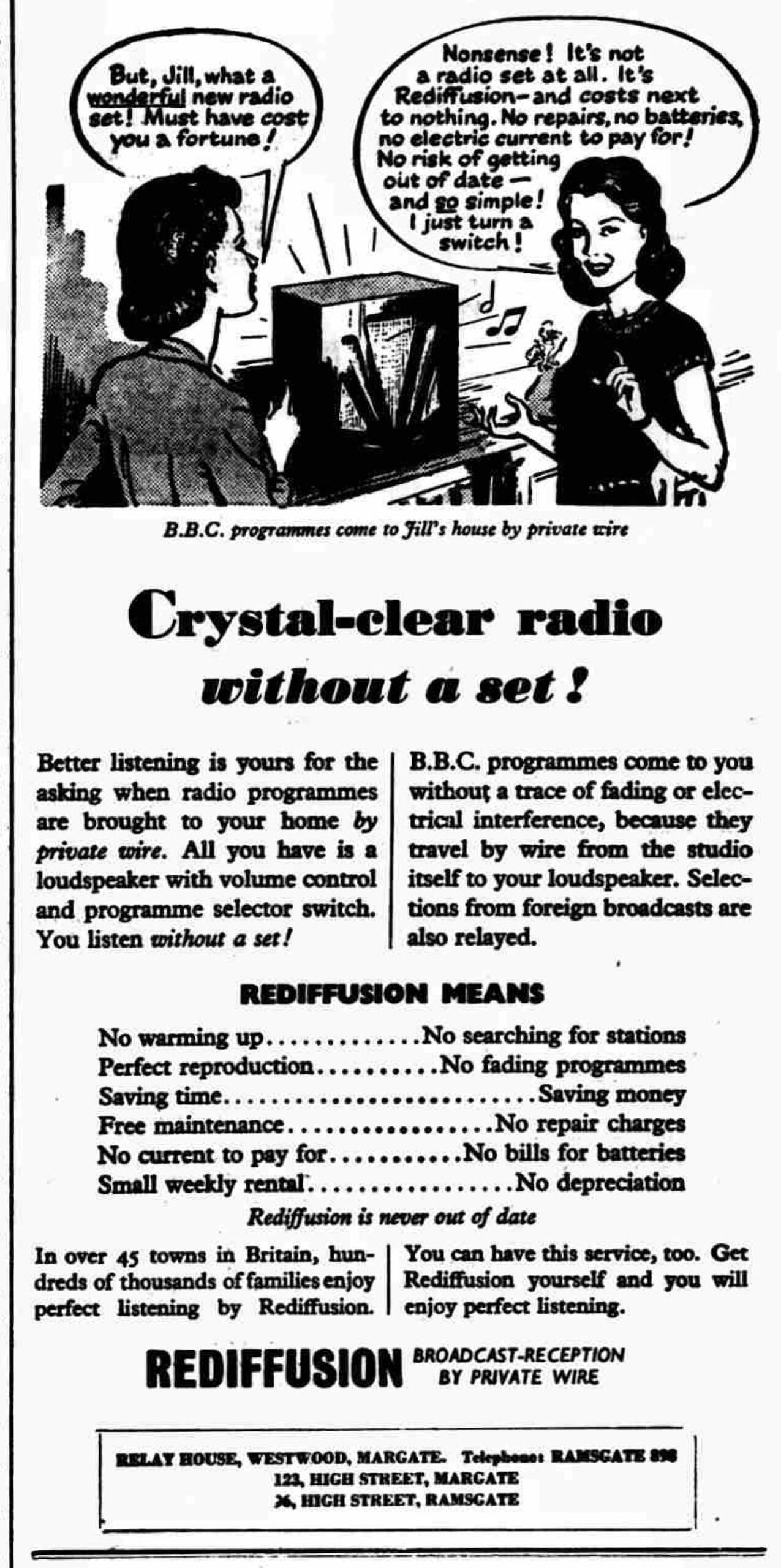
In December 1928, Ramsgate became an experimental zone for Rediffusion. In wireless broadcast’s early days, standard radio sets were expensive luxuries and the spectrum was highly volatile. Atmospheric static, fading signals, and local radio frequency clutter filled the airwaves. Along the Thanet coast, constant radio chatter from military aircraft at nearby RAF Manston obliterated over-the-air frequencies, creating a wall of unwanted noise. Rediffusion bypassed individual tuning and hardware entirely. A high-gain master aerial array captured weak waves at a central hub. Signals were cleaned, amplified, and re-diffused over a physical grid of overhead wires into rented household loudspeakers, transforming a chaotic wave into an affordable, noise-free broadcast.
Under Siege
During WWII, Thanet became the frontline known as Hellfire Corner. This domestic auditory network shifted from entertainment into a vital infrastructure of resistance. Kept on a 24-hour civil defence alert, it was shielded from outside radio frequency chaos, carrying air-raid warnings and emergency dispatches when the sky faced enemy radio-direction finding.
This era birthed polyethylene (polythene), bridging domestic listening with modern warfare. Declassified from top-secret radar projects, this polymer provided unprecedented high-frequency dielectric insulation for cables. Physical ghosts remain hidden in plain sight; older Thanet properties still feature original Rediffusion polyethylene cables, junction boxes, and iron brackets bolted to brickwork. However, petrochemical polyethylene carries a severe ecological toll, persisting for centuries and fragmenting into toxic microplastics. This material crisis forces the electronics industry to look toward bio-based alternatives like sugarcane bio-polyethylene or renewable bioplastics.
Re-Diffused Warfare Today
A century later, Rediffusion’s architectural ghost dictates survival across modern electronic warfare battlegrounds. Today’s environment features intense targeted RF jamming; traditional long-range wireless links are instantly intercepted, blinded, or hit by kinetic strikes. Modern militaries have abandoned direct long-distance transmissions for an evolved tactical radio relay hierarch involving drones mesh networks and balloon relay nodes.
- Mobile Strategic Hubs: Armoured vehicles projecting directional, high-bandwidth digital beams.
- Airborne Drone Mesh Networks: Loitering munitions with radio modems flying in frequency-hopping chains.
- Mobile Ad-Hoc Networks (MANET): Infantry systems where handheld radios, vehicles, and helium balloons act as autonomous, self-healing relay nodes.
Thanks
Produced and composed by Magz Hall, with recordings from a 101 Arts, Base Frequency Residency. Huge thanks the artists listed who joined her for a collective jam at the Greenham Peace Garden. Alongside recordings made during a residency in the Pyrenees with composed material on the Colossus Synth at The University West London’s Townesend Studio, drone, radio and WW2 bombing.
Voice accounts Ewart Backhouse – Hall
War accounts based on the written accounts by John Side and Thomas Solly
Excerpts from Magz 101 Arts Base Frequency Greenham Peace Garden Jam with
@annaweatherston
@aswarm_works
@awoodheadmusic
@chrislittleboat
@a.city.of.dreams
@doska.animation
@empeasgood
@ezra_gray_audio
@graeme_leak
@hallmagz
@ideasofnoise
@invisibleray
@jamesfozfoster
@jon_somerscales
@katkatmusic
@linett_kamala
Lorna Rees of @gobbledegooktheatre
@_mark__anderson
@martinwest789
@margaretfiedlermcginnis
@niwidmusic
@noisytoys
@richiesmith3602
@shlinga_makes_sounds
@soundinterventn, Paul Streetly, Tim Hill, and Sam Chappell
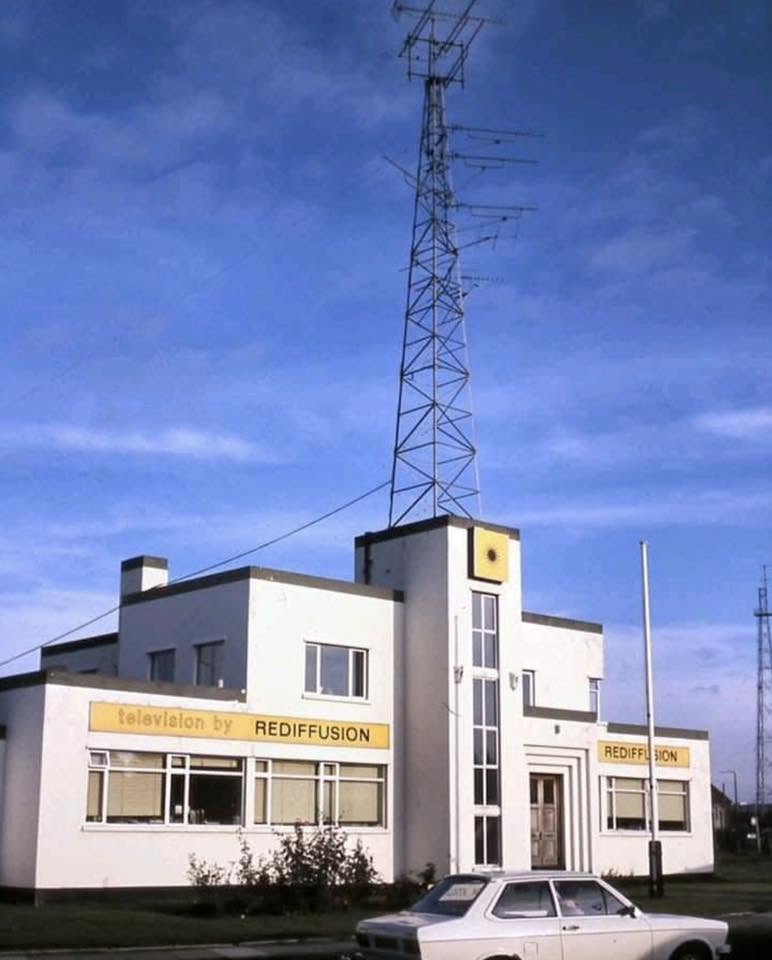
The Rediffusion broadcast station in Westwood Cross


You must be logged in to post a comment.